Skip to content
  • Home
  • Events
    • Events
    • Event Submission
    • Play Dates
  • Jobs
    • Jobs
    • Post Your Job
    • Job Dashboard
  • Store
    • Store
    • Downloads
    • A Workbook for Creating Healthy Relationships for Children
    • Cart
  • Childcare
    • Childcare
    • Childcare Catalog Submission
  • Blog
    • Blog
    • Video Blog
  • Contact Us
    • Contact Us
    • Advertise
    • Privacy Policy
    • Terms and Conditions
  • My Account
Login/Register

Category: Parenting

Motherhood is Equal to 2.5 Full Jobs

PARENTING, UNCATEGORIZED

Do you feel overwhelmed with the mountain of tasks you need to complete each day? Between all the diaper-changing, meal prep, and bath-time duty, it’s no wonder you’re so tired. A recent study from Welch’s Market Researchers OnePoll showed that most mothers are working an average of 98 hours per week. They’re working the equivalent of 2.5 full time jobs.

A Never-Ending Workload
Find it on Amazon

Between May 05, 2017, and May 11, 2017, the study profiled the weekly schedule of 2,000 mothers of children ages 5-12. 

On average, moms began checking off tasks at 6:23am and wouldn’t finish their parenting or work-related responsibilities until 8:31pm that evening. In total, that makes each day equivalent to a 14 hour shift--way more than the amount expected of a typical 8-5 full-time job. 

This exhausting workload might sound familiar to moms, especially those who are also employed. According to the US Department of Labor, in 2020, over 70 percent of all women with children under age 18 were working or looking for work. 

Yahoo News reports Casey Lewis, MS, RD and Health & Nutrition Lead at Welch’s said: “The results of the survey highlight just how demanding the role of mom can be and the non-stop barrage of tasks it consists of.”
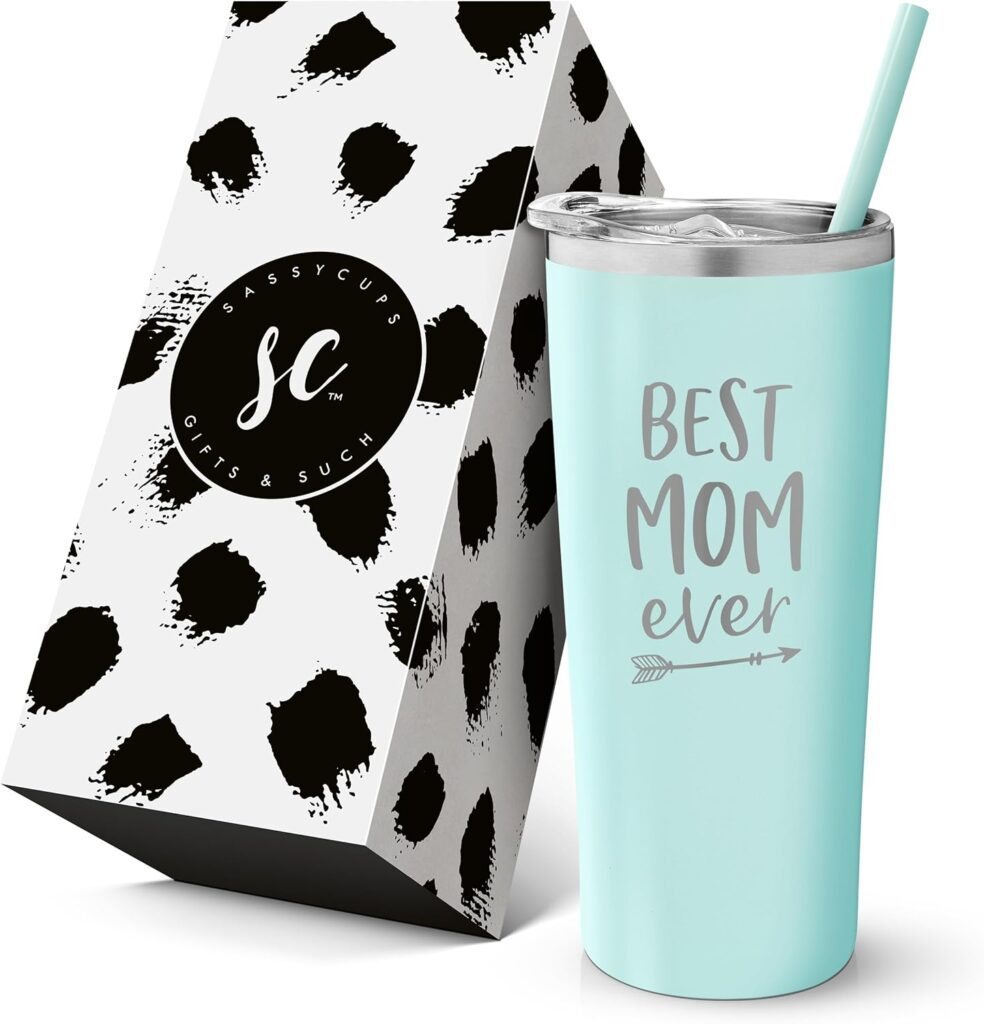
Find it on Amazon

How Can You Help?

Find it on Amazon

The study found that wet wipes, tablets, fast food drive-thrus, and tv shows are the handy solutions to a mother’s most common problems. What else helps Mom’s sanity stay in check? 

Anything you can do to cut down on that never-ending pile of tasks would be great! Look around the house and think about what chores need to be done. Doing those routine tasks saves her time and energy.

Big Stressor – Food

The study cites an overwhelming majority of moms (84%) are concerned about their children getting a healthy, well-rounded diet with vegetables and fruit. Extra help with grocery shopping, meal planning, and food preparation can do wonders for busy moms.

Time to Relax

Most importantly, mothers need time to relax and recharge. The study reported the average mom is lucky to get around an hour and seven minutes to herself per day. For some moms, an hour alone might sound like a dream. Partners, grandparents, and supplemental caretakers like nannies and babysitters can step in and give mom a chance to “clock out.”

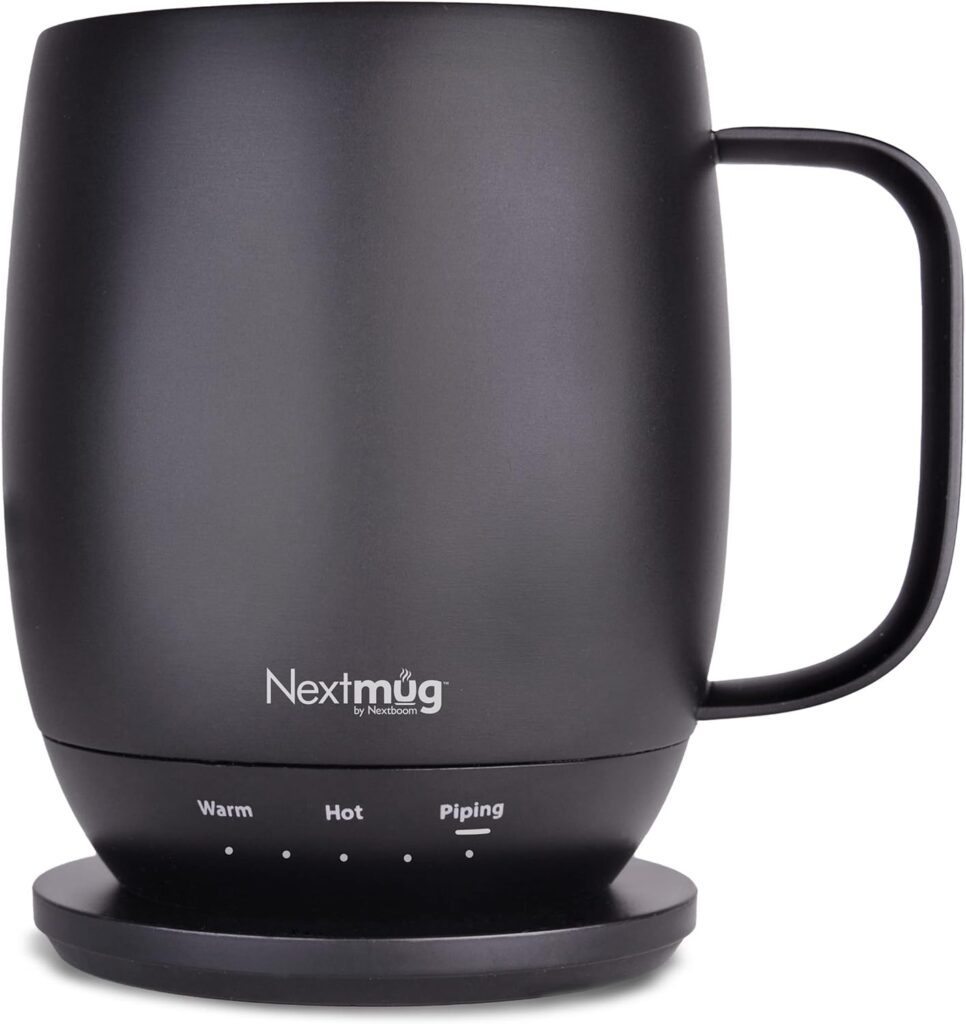
Find it on Amazon

Find it on Amazon

Sometimes, overworked moms might not even be sure how to unwind. Here are some ideas:

  • Watch a favorite movie or catch up on the latest show
  • Take a long bath
  • Enjoy a glass of wine or cup of coffee
  • Catch up with friends and family
  • Creative hobbies like art
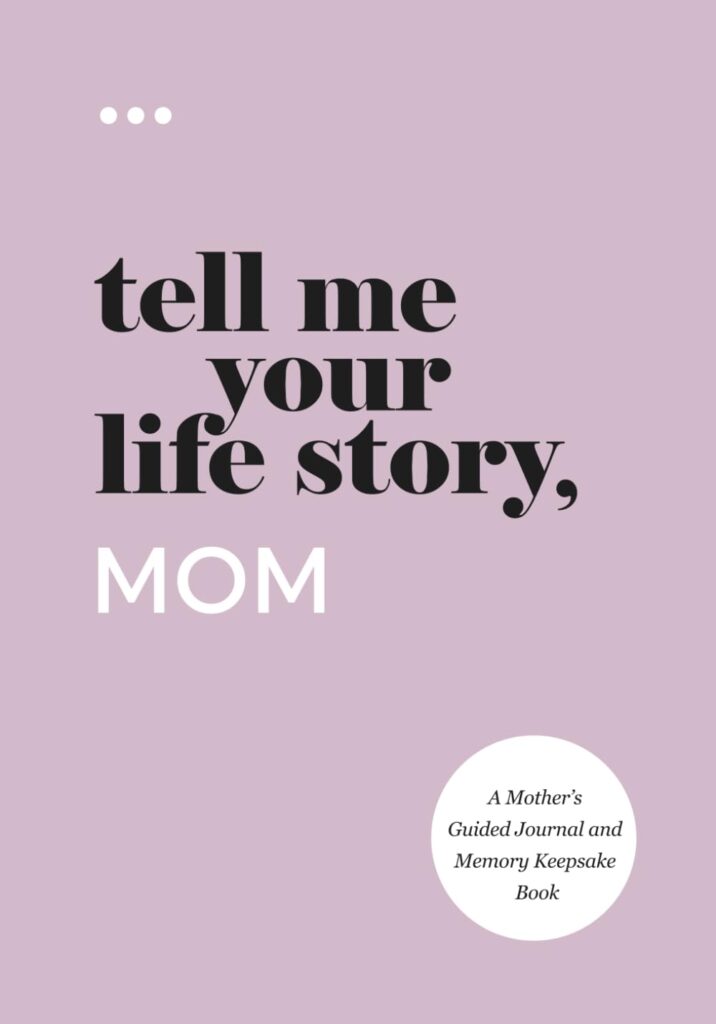
  • Reading or journaling
  • Find help

While most moms would agree parenthood is worth all the stress and messes, there are still ways to make their lives easier. 

Moms don’t need a study to know motherhood is not an easy job–or 2.5 Full Jobs! Still, maybe it’s eye-opening for others to see the evidence of just how time-intensive motherhood can be. Hopefully, this research reminds the rest of society just how much support (and coffee) moms really need. 
Find it on Amazon

Disclosure: We use affiliate links to earn a small commission. If you choose to purchase something through one of these links, there is no cost to you.

Homepage
Homepage
Posted in Parenting, UncategorizedTagged appreciation, mom

Nanny vs Babysitter

PARENTING

If you’re considering what sort of childcare your children need, a common dilemma for busy parents is the choice between nanny vs babysitter. Both will take care of your children but what’s the difference? Why choose a nanny over a babysitter or vice versa? First, let’s break down the terms.

Babysitters

Babysitter are short term caregivers. They are hired for nights or weekends when you need a caretaker for a few hours. While they might provide basic child-minding like food or entertainment, they are not as involved as a nanny. Babysitters can be of any age or experience level, and they usually have no formal training.

Nannies

Nannies are long-term, or live-in, or out childcare specialists. They are very involved in your children’s lives and play a bigger role with your children, food preparation, or education. They usually come with years of experience working with children, and it’s common for them to have a degree in early childhood development or education. 

Who is a babysitter?

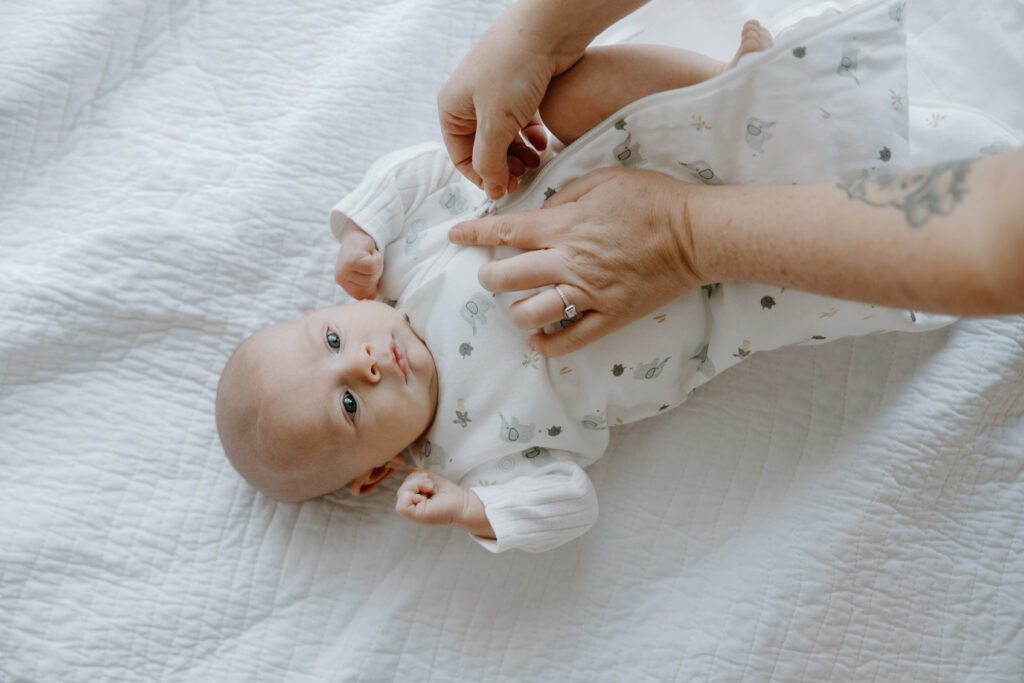
Sleep Sacks for Baby

Most people are familiar with the concept of babysitters or even have experience being one themselves! Perhaps your babysitter is the neighborhood teenager who needs a part-time job. They might be the retired older woman who has raised several children of her own. They could even be a family member who offers to take the child for the evening.

Whatever your relation to these babysitters is, it’s usually a short-term, hourly-paid position. They are usually hired for 3-6 hours at a time and their role consists of basic childcare. For example, a babysitter’s expected role is something along the lines of making dinner, entertaining the kids, and putting them to bed.

Babysitters can be of any age and any experience level. Since this is a casual work relationship, they do not require the experience or training of a nanny. However, these days many parents expect a babysitter to have CPR and first aid certification.

The babysitter will ideally get along well with your children and give them all the nurturing you would while you’re away, but their bond won’t be as strong or long-lasting nanny’s bond.

Pros of babysitters:

Rate — They are often paid an hourly rate based on their experience level. If this is a babysitter’s first job, they will not charge as much as an experienced nanny. 

Flexibility — Babysitters are hired as needed, and usually for only a few hours. Date night out or if you have some quick meeting and you need someone to watch your kids.

Trial Run — Can be a good “trial run” before committing to a long-term caregiver. Allows you to assess your child’s comfort level with different caregivers and identify potential personality matches for future needs.

Cons of babysitters:

Lack of training — Babysitters generally are not as specialized or experienced as nannies. At most, they might have CPR and first aid certification. 

Less familiar — Because babysitters are not around as much as nannies, they won’t be as involved in your children’s lives. If your children are shy, they may not be as comfortable around their caretaker.

Availability — A younger babysitter probably won’t be available during daytime hours if they’re in school or working another job. Scheduling might be more of a headache.

Who is a nanny?

Nannies are specialized and experienced child caretakers. Because they often studied child development, education or psychology, they have much more training. For most nannies, childcare is a long-term career, not just a part-time gig. 

Usually, being a nanny is a full-time position and they will work five days a week, around 40-50 hours. In addition to childcare, they might perform extra duties such as making food, driving children to extracurriculars, or engage in developmental games. 

Keep in mind that a nanny hired as your employee, not an independent contractor, so most likely they will be entitled to benefits and you will pay employment taxes.

Nannies often have CPR certification, complete educational courses, and many years of experience. They know how to create a nurturing environment that fosters your child’s well-being.

Pros of nannies:

Specialized training — Nannies are professionals and come with many qualifications and experience. You can feel at ease knowing someone skilled is taking care of your child.

Stability — Because a nanny is around so often, they will provide a consistent nurturing presence in your children’s lives. They can offer more attention and engagement than a babysitter.

Childs’ development — Nannies will often be far more involved in a child’s development. Engage with children via games, reading, exercises, etc. 

Cons of nannies:

Personal differences — Parents and nannies might have different styles of childcare or discipline. Nannies will be spending a lot of time with your children and you should be very clear about your parenting style. It’s important to discuss these expectations beforehand and decide whether you will be a good match.

A Professional Relationship — As their employer, you have more legal responsibilities. You will be responsible for your nanny’s taxes and benefits, like sick leave. Because you will need a contract, there is more paperwork and liability. 

Cost — Nannies are more expensive than a babysitter due to their extensive training and qualifications. As mentioned above, you are also responsible for their benefits and, depending on your agreement.

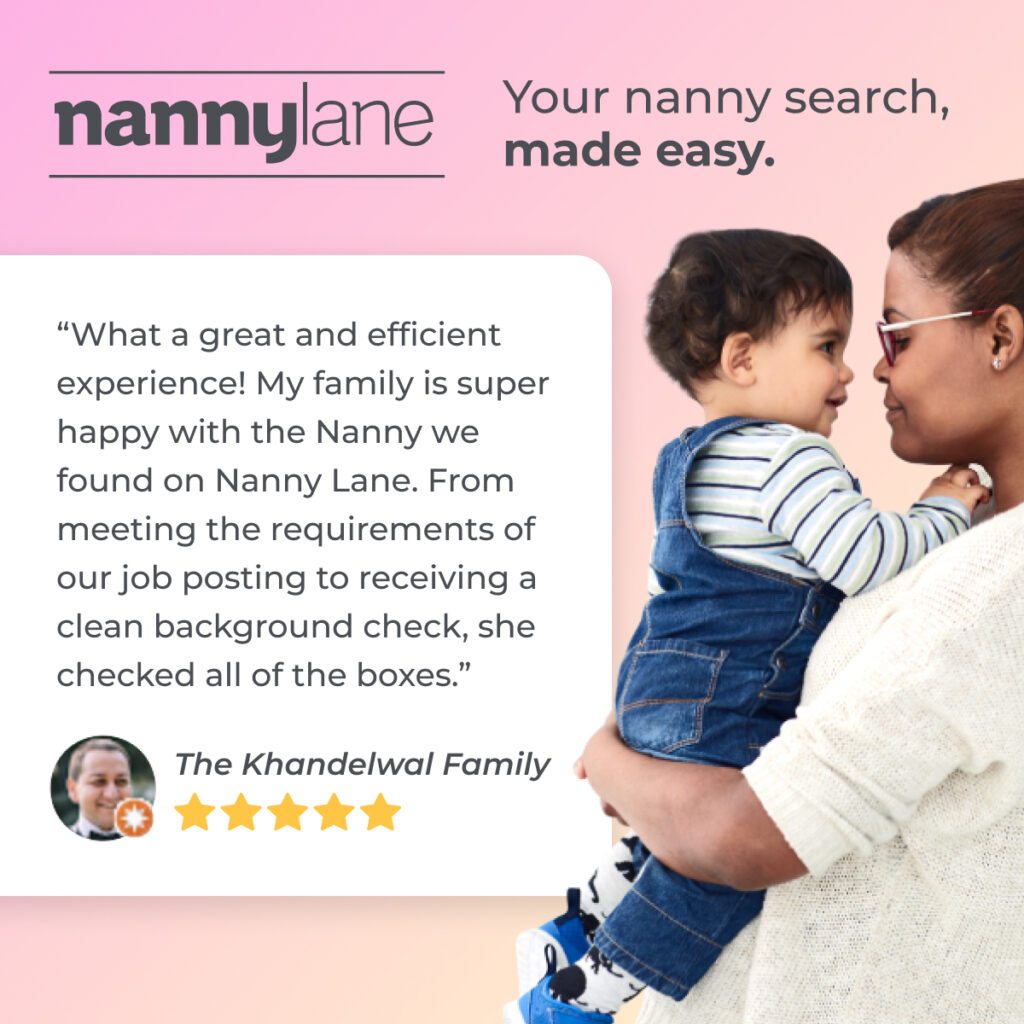
NANNY LANE

Nanny vs. Babysitter – which option is right for you?

Now that we’ve laid out the differences between a nanny vs babysitter, the question becomes: what will work best for you? The choice between a nanny vs a babysitter is ultimately very personal. 

Are you looking for someone to be very involved and focused on your children? Maybe your household has two full-time parents and you need consistent assistance with childcare. Perhaps you would feel better knowing your children are with an experienced professional.

Nannies or Babysitters may not always follow this terminology breakdown. There is always some overlap in caretaker roles.

Disclosure: We use affiliate links to earn a small commission. If you choose to purchase something through one of these links, there is no cost to you.

Homepage
Homepage
Posted in ParentingTagged advice, nanny

6 Fun and Educational Board Games For Kids

GAMES, LIFESTYLE, PARENTING

You probably remember playing board games as a kid–and probably as an adult, too! Maybe it was something you did often, or maybe only after a holiday dinner or at a sleepover. These days, they might seem antiquated among the likes of video games, tv shows, and tablet screens. However, there are so many more options than just Uno or Monopoly. Now more than ever, board games are a great way to not only entertain your kids but get them thinking and learning too! Here are 6 fun, educational board games for your kids, divided into two age groups. 

AGES (3-6)

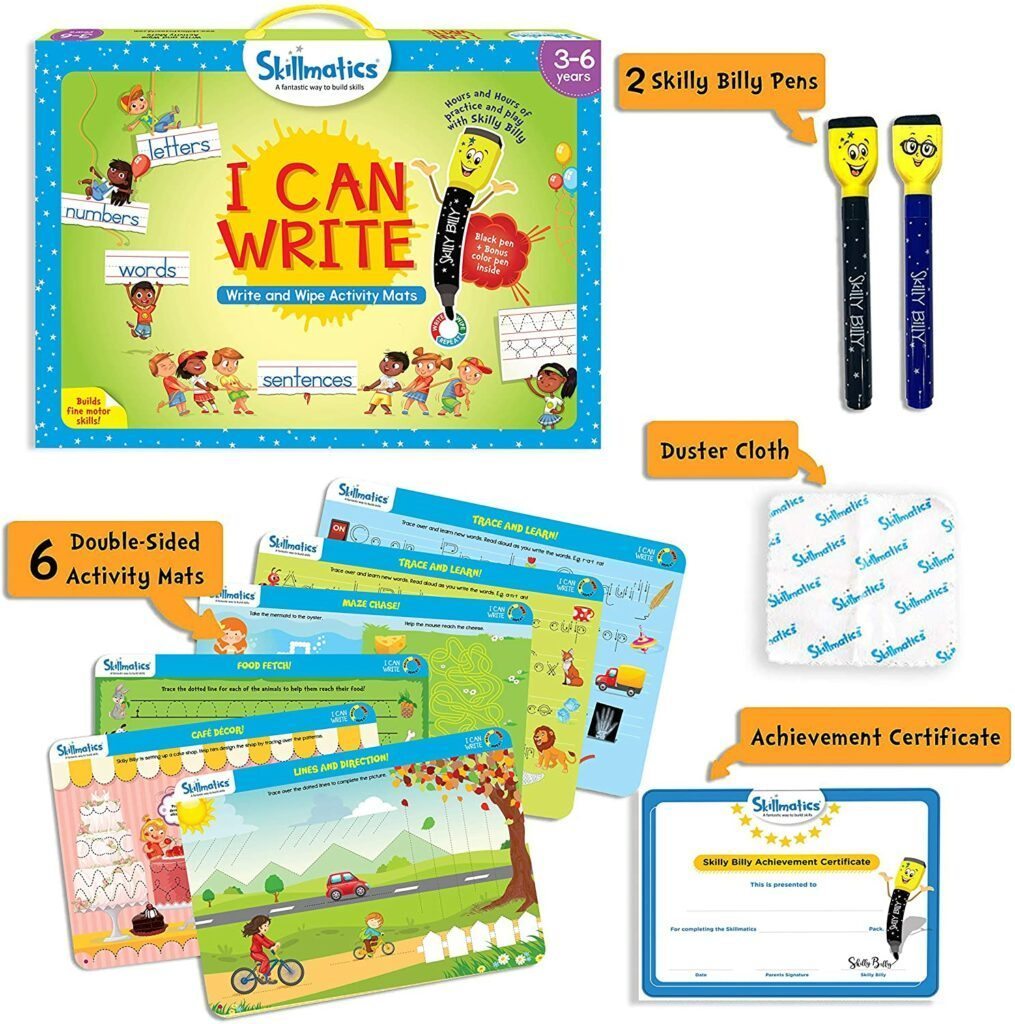
Skillmatics Educational Game: I Can Write (3-6 Years)

I Can Write is an interactive game meant for preschoolers to practice their writing and fine motor skills. It comes with 6 durable, double-sided writing mats and a wipe cloth so they can erase their mistakes and keep going. Your child will practice writing the alphabet, shapes, colors, and body parts. It even comes with an achievement certificate for when they finish. 

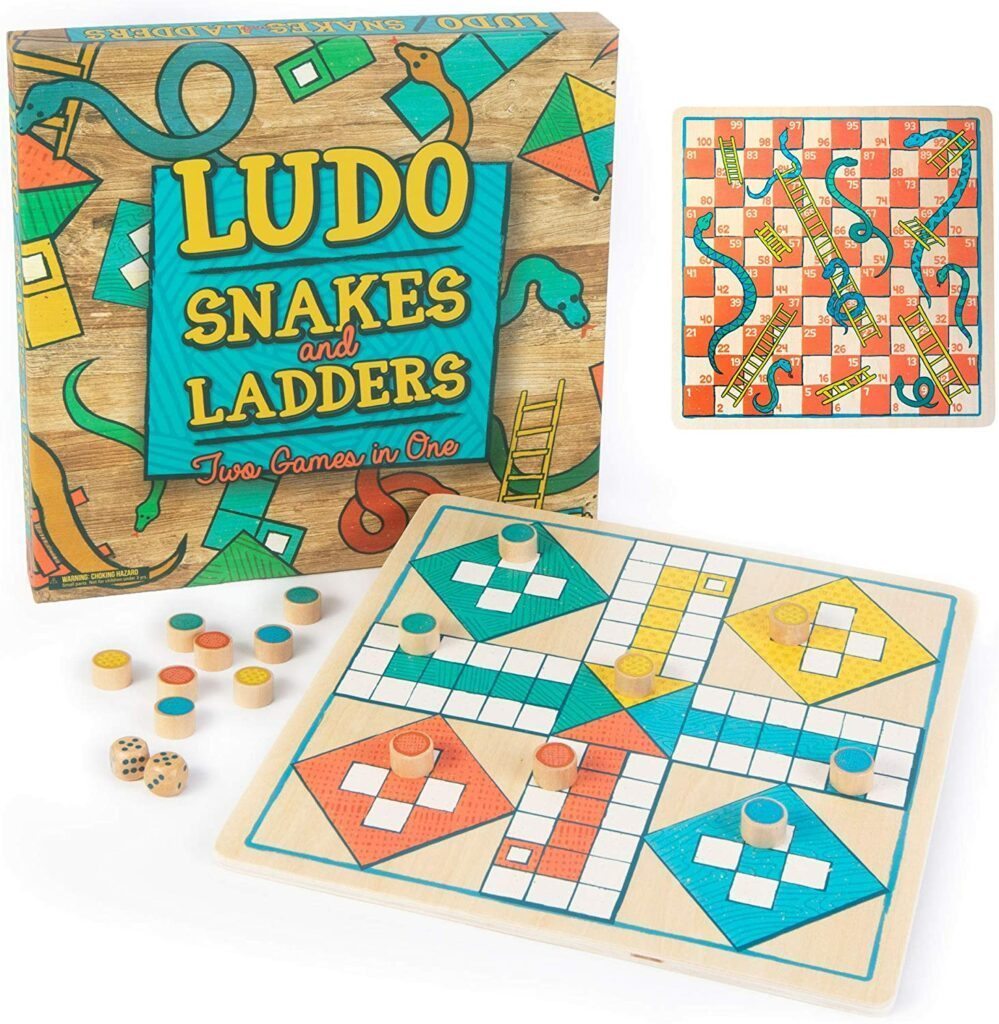
Giant Ludo and Snakes & Ladders Board Game

You might be familiar with Snakes and Ladders! This game is as simple as it is classic: the first player to get to spot 100 wins. On the other side of this board is Ludo, where they race to the finish line by using a roll of dice. This game board has no reading required and it’s perfect for young ones learning to count and add. Meant for 2-4 players, the games also build their social skills and cooperation. 

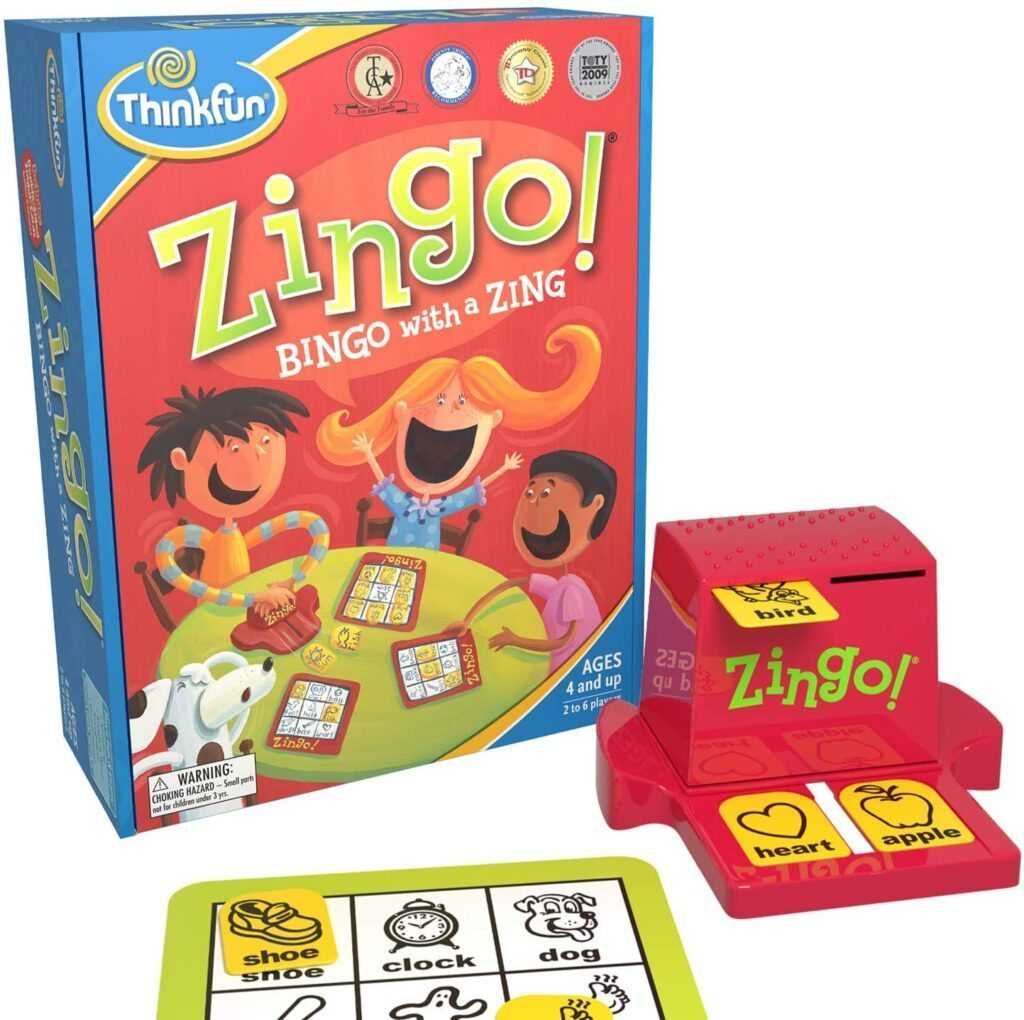
Zingo Bingo Preschool Game for Pre-Readers

Zingo is a version of bingo that’s great for young players who are developing their reading and pattern-finding abilities. The bingo board has large pictures and letters so they can practice their matching and word-association skills. It can be played with up to 7 people and comes with two levels, so you can choose the difficulty. 

AGES 7-12

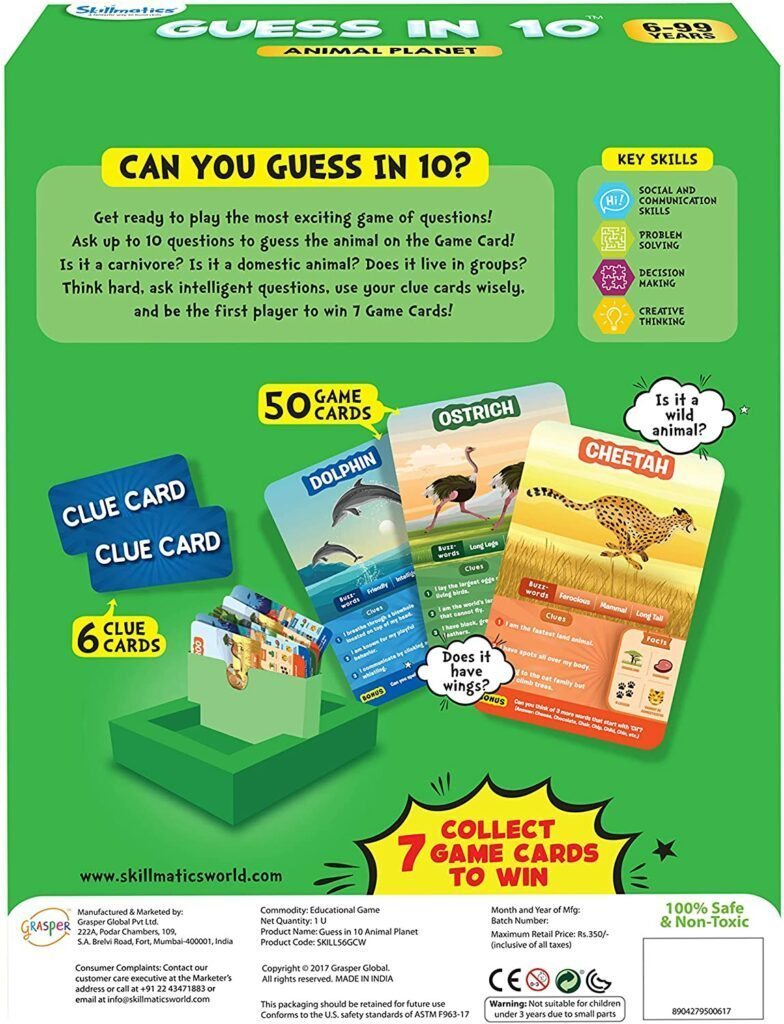
Skillmatics Educational Game: Animal Planet

Animal Planet is a card game that can be played individually or with teams of up to 6 people. Players can guess up to ten questions to find out which animal is on the game card. If you guess right, you keep the game card, and whoever gets to 7 game cards wins! This game encourages your child to ask questions and use the answers to think critically. 

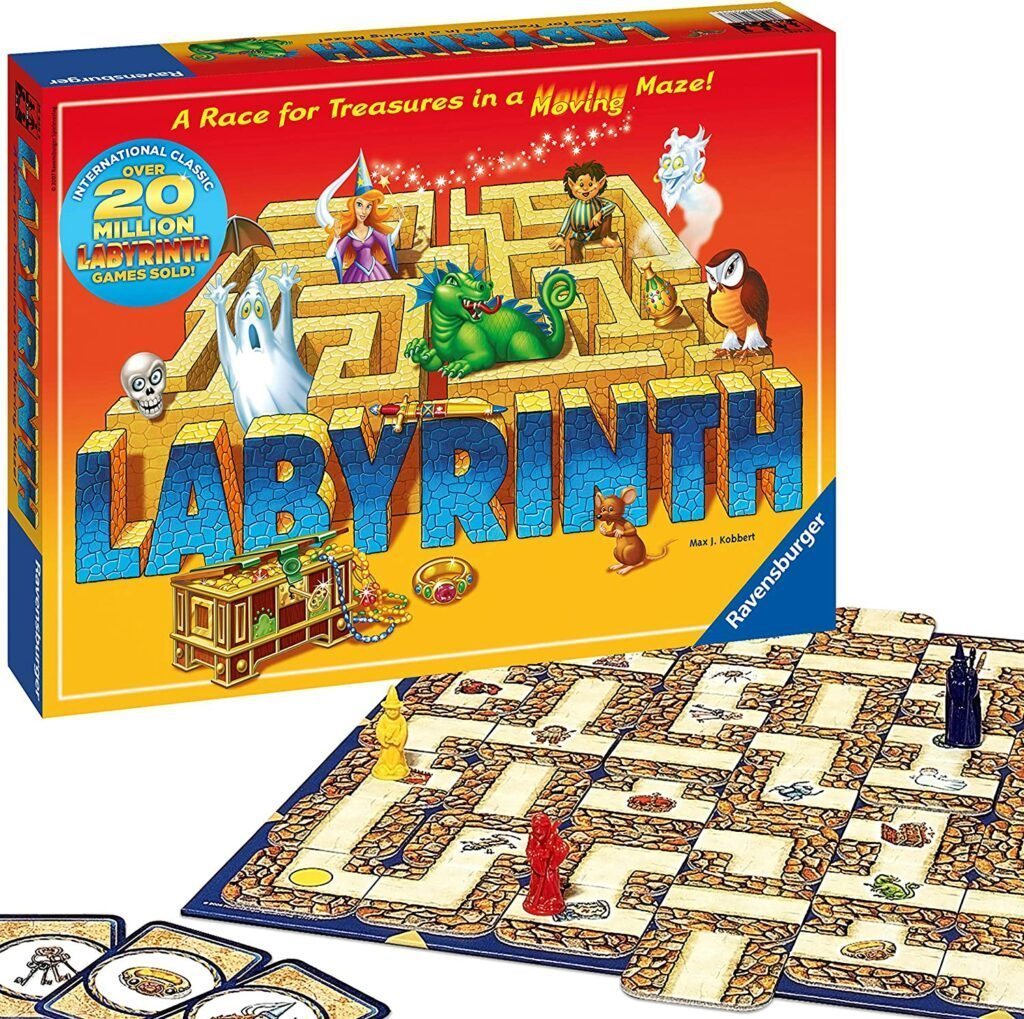
Ravensburger Labyrinth Family Board Game

World-famous, Labyrinth is a game in which you must find the shortest route out of the maze. Each turn you can collect treasure cards or block your opponent’s path. This one requires 2-4 players and tests all sorts of skills–planning, cooperation, and cause and effect. It will get your child thinking strategically, and it has a fun adventure theme!

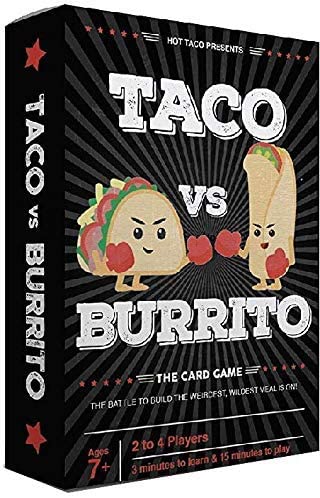
Taco vs Burrito – The Wildly Popular Surprisingly Strategic Card Game

Taco vs Burrito is another strategic card game, but this one was created by a 7 year old. You use the cards to create the wackiest, craziest meal. It sounds simple but, like in Uno, you can play nice or sabotage another player, so this game can be surprisingly strategic.

Do you have other favorite games? Share with us

Disclosure: We use affiliate links to earn a small commission. If you choose to purchase something through one of these links, there is no cost to you.

Homepage
Homepage
Posted in Games, Lifestyle, ParentingTagged games, kids

11 Ways to Baby-Proof Your Home

BABY, CHILD, PARENTING

Crawling, climbing, and curious – that’s the name of the game for most babies! As your little explorer embarks on their journey of discovery, it’s natural to want to create a safe and secure environment for them to thrive. Here are 11 easy and effective ways to baby-proof your home, transforming it into a playful space while giving you peace of mind.

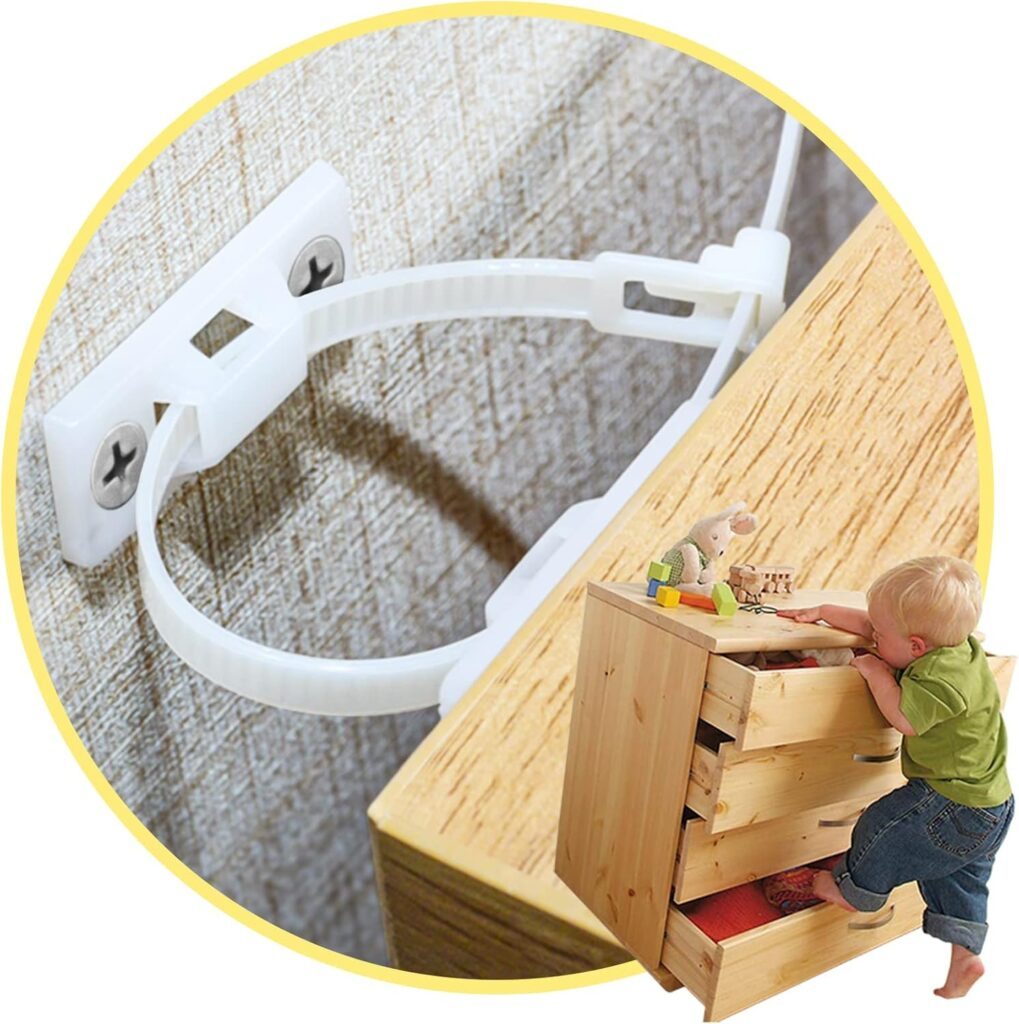
Mount furniture to the wall

Find it on Amazon

Babies don’t weigh much, but they can still flip a dresser over. Those of you who live in areas prone to earthquakes might already now know how securing furniture works.

You don’t need to go so far as nailing into your floor. Secure furniture is to use plastic or metal brackets that screw into the wall and make sure it won’t tip over.

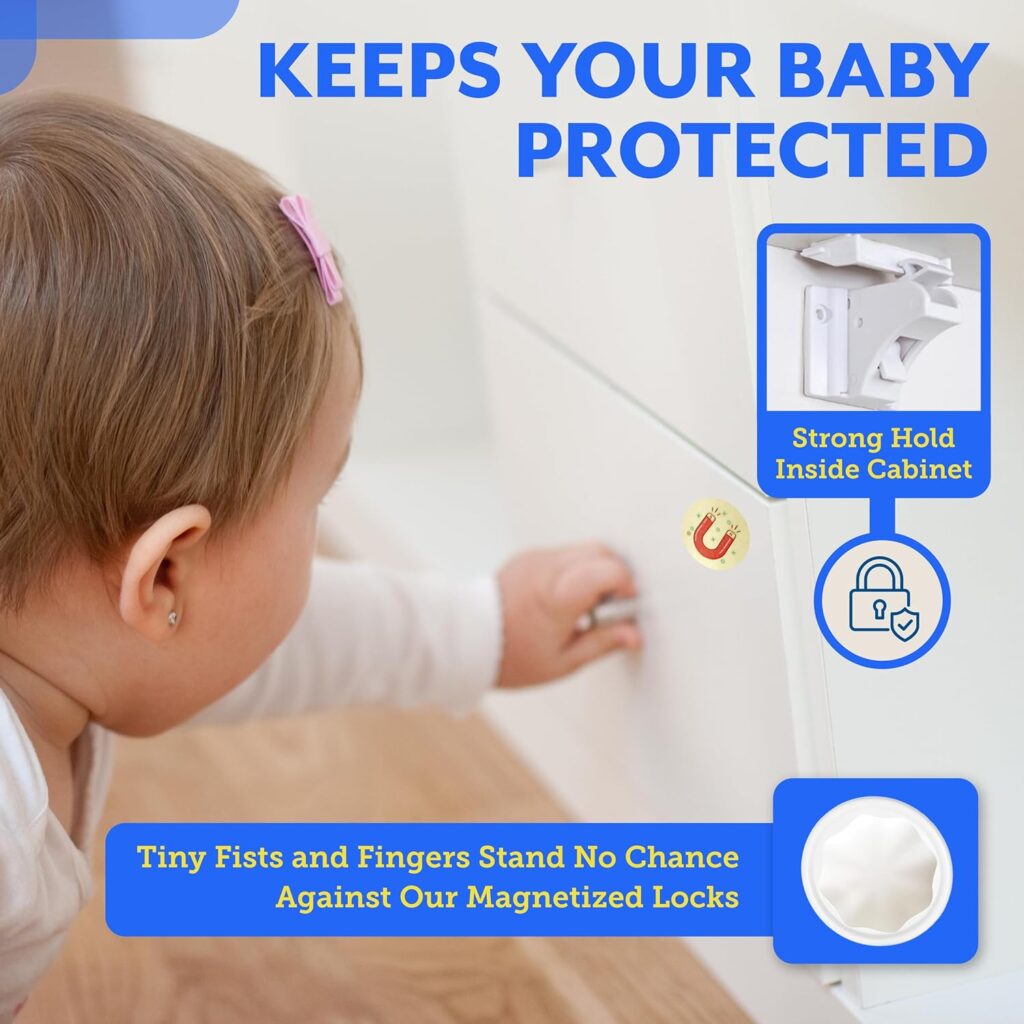
Lock your cabinets

Medicine bottles, cleaning products, knife drawers–we definitely don’t want kids getting into these. Most products these days come with baby-proof lids but it’s still important to go the extra step and lock the cabinets too.

Some locks wrap around the doorknobs and are released with a button or slide. Another option is using magnetic locks. With these, you simply remove the magnet on the outside to open the door.

Find it on Amazon

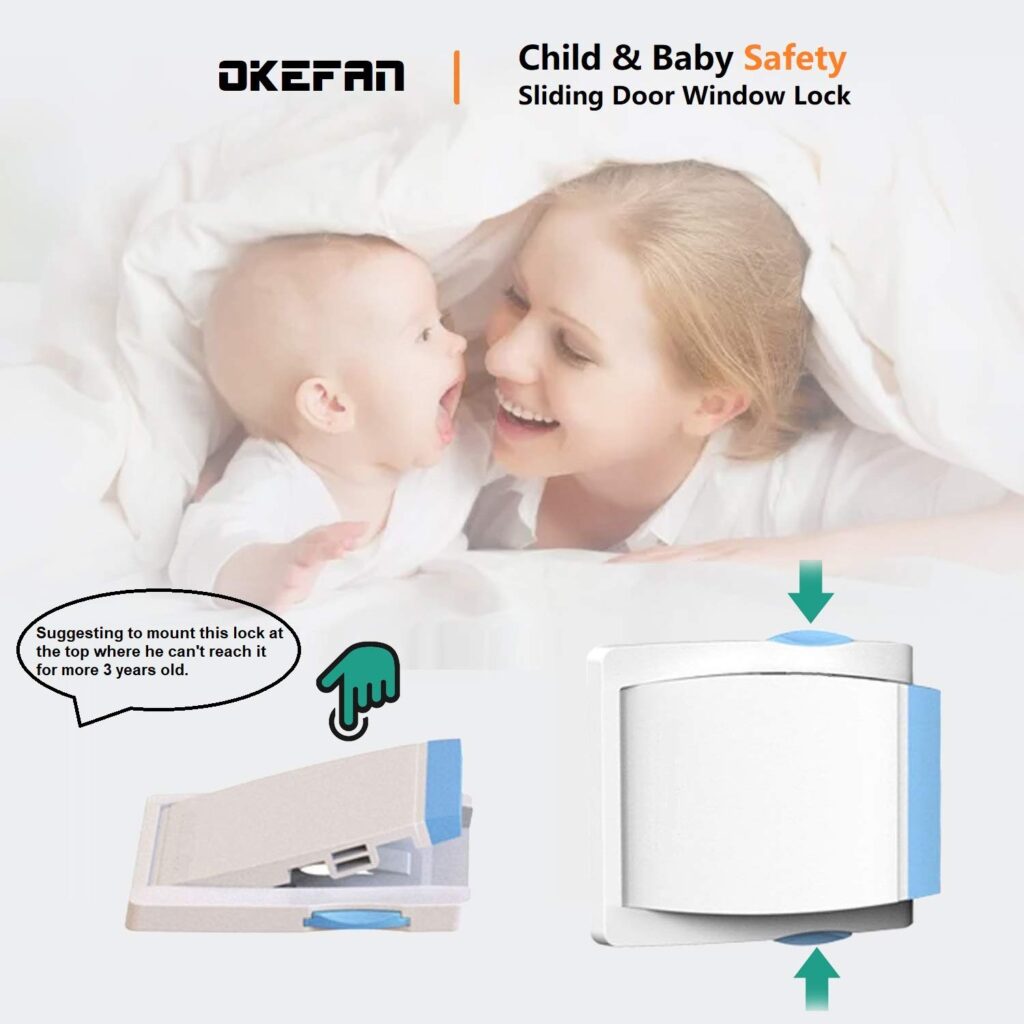
Install window locks

Find it on Amazon

It’s great having the windows open on a warm door, isn’t it? Fresh air is good for everybody! Still, just like cabinet doors, you should install window locks so your child can’t climb through.

A good way to ensure your tot can’t escape is to use a window stoppers. Keep the window from opening more than a few inches.

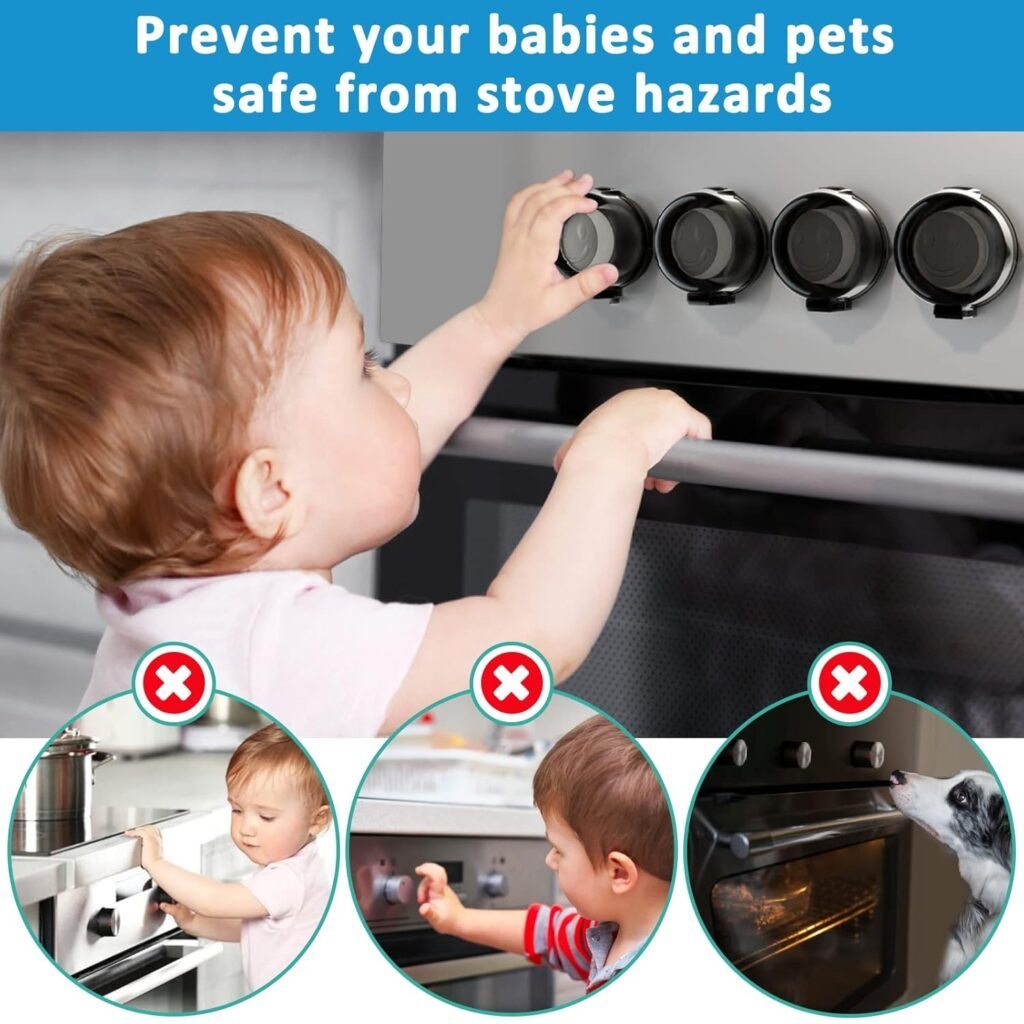
Use stove knob covers

We’ve all had a moment of panic about whether we left the stove on. Worse would be if you never turned on the stove at all–but your baby did.

To ensure your baby can’t reach your stove knobs, I recommend using stove knob covers. These are plastic hinged covers. You can flip them up and turn the knob when you need them. Baby-proof your home and keep your baby safe.

Find it on Amazon

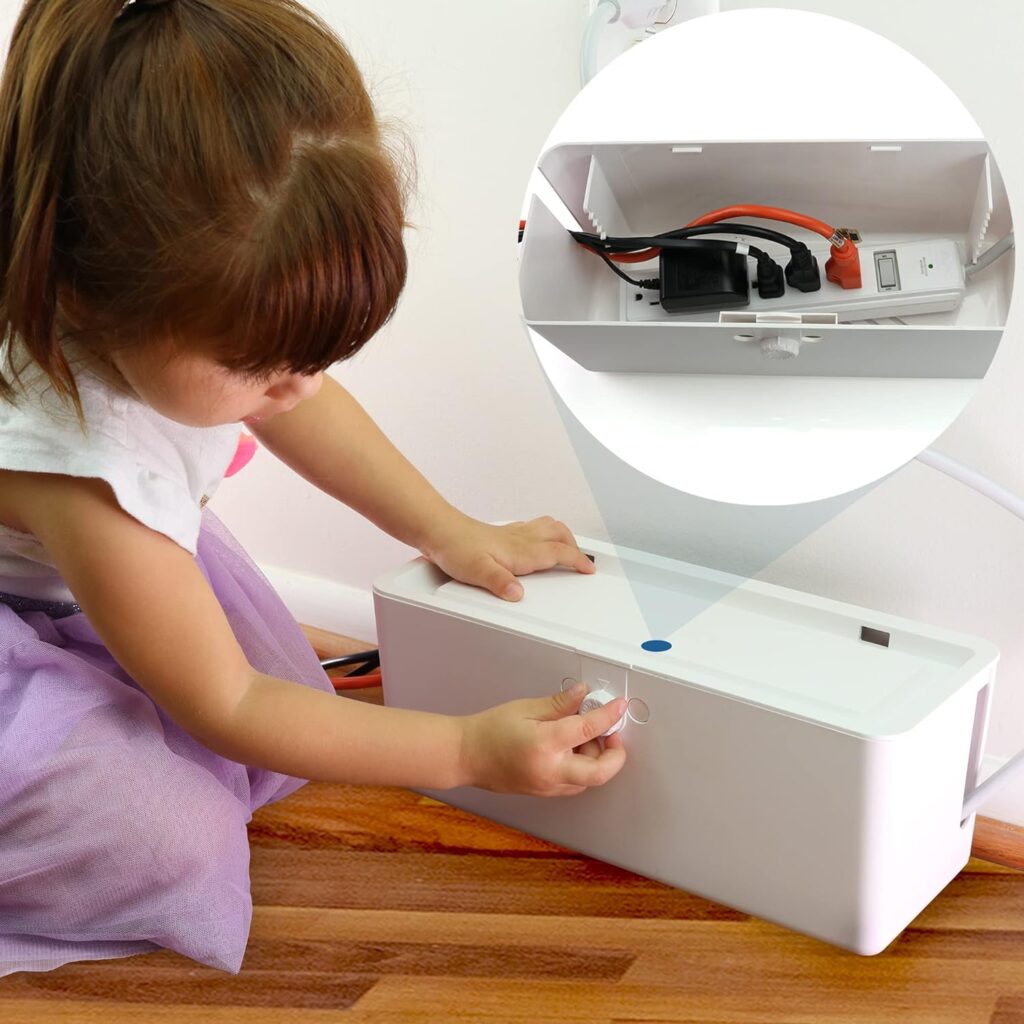
Hide electrical cords

Find it on Amazon

Babies love to grab at things, and cords are no exception. Whether they’re lamps, appliances, or holiday lights, the cords should be hidden and tucked away so they can’t pull on them. Cable management is good practice, anyway.

First, you want cords out of sight. Use outlet cover box to hide your power strips . Also, hide cables, use hooks or cable protectors that attach to the wall. You can also run cords behind furniture or tape them down along baseboards.

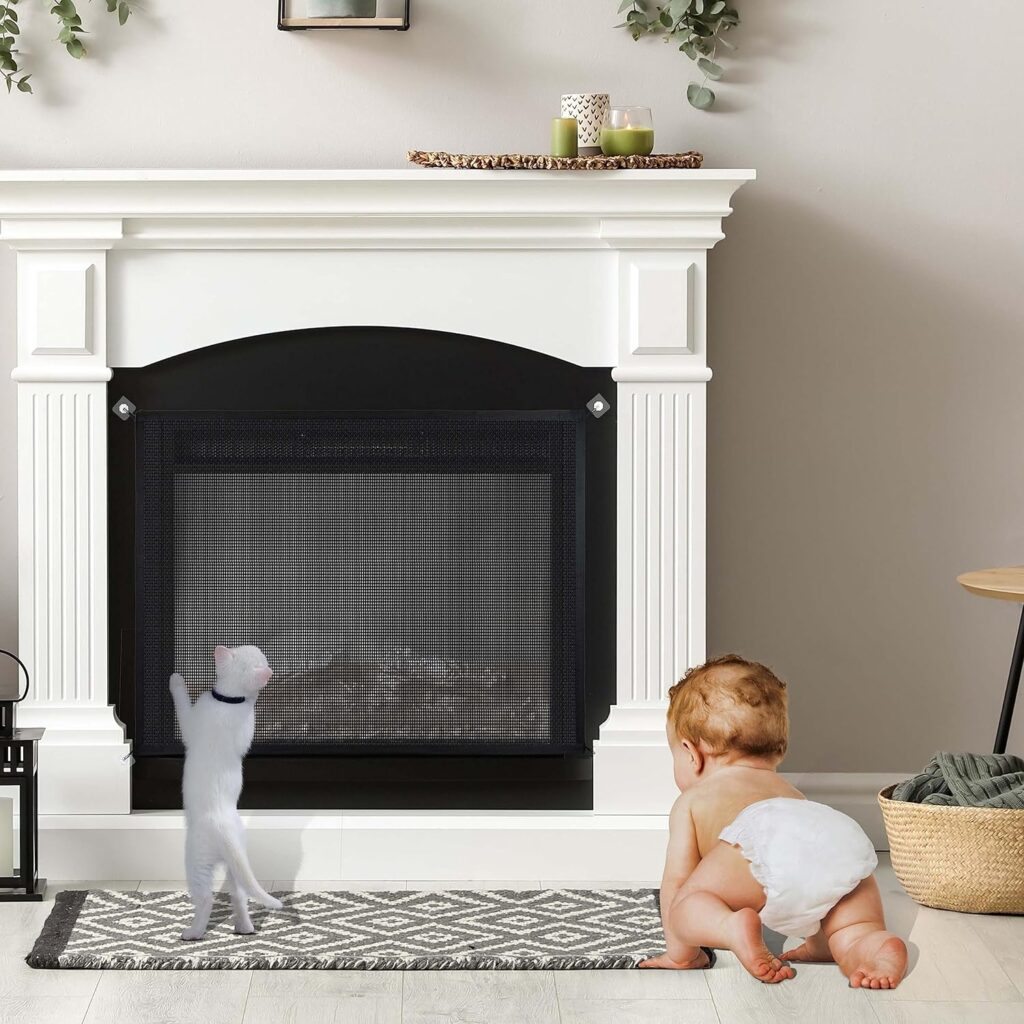
Install a fireplace screen

Find it on Amazon

If you have a fireplace then you’ll definitely want a fireplace screen. These can either be doors that are attached to the fireplace or gates that block off the whole area

Avoid freestanding screens because even a small child can knock these over and get access to the fireplace.

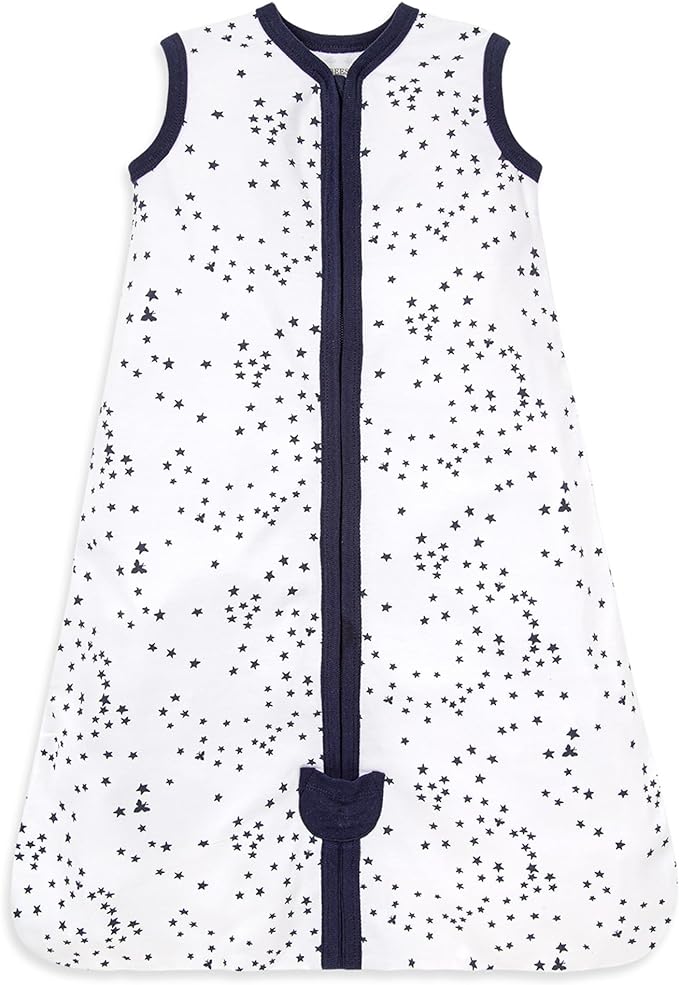
Keep the baby’s crib free of toys, pillows, and blankets

Be sure there’s nothing in the crib with your baby, especially if they’re less than a year old. Even if they’re older than a year, the CDC still recommends you don’t keep anything in bed with them. Yes, even that favorite toy. Use sleepy sacks for keeping your baby warm.

Toys, pillows, and blankies in the crib look cute, but they pose suffocation risks. Small objects, like tiny toys or necklaces, can be a choking hazard. Alone in their cribs is when babies are their most unsupervised, so you should take extra caution and baby-proof the crib.

Find it on Amazon

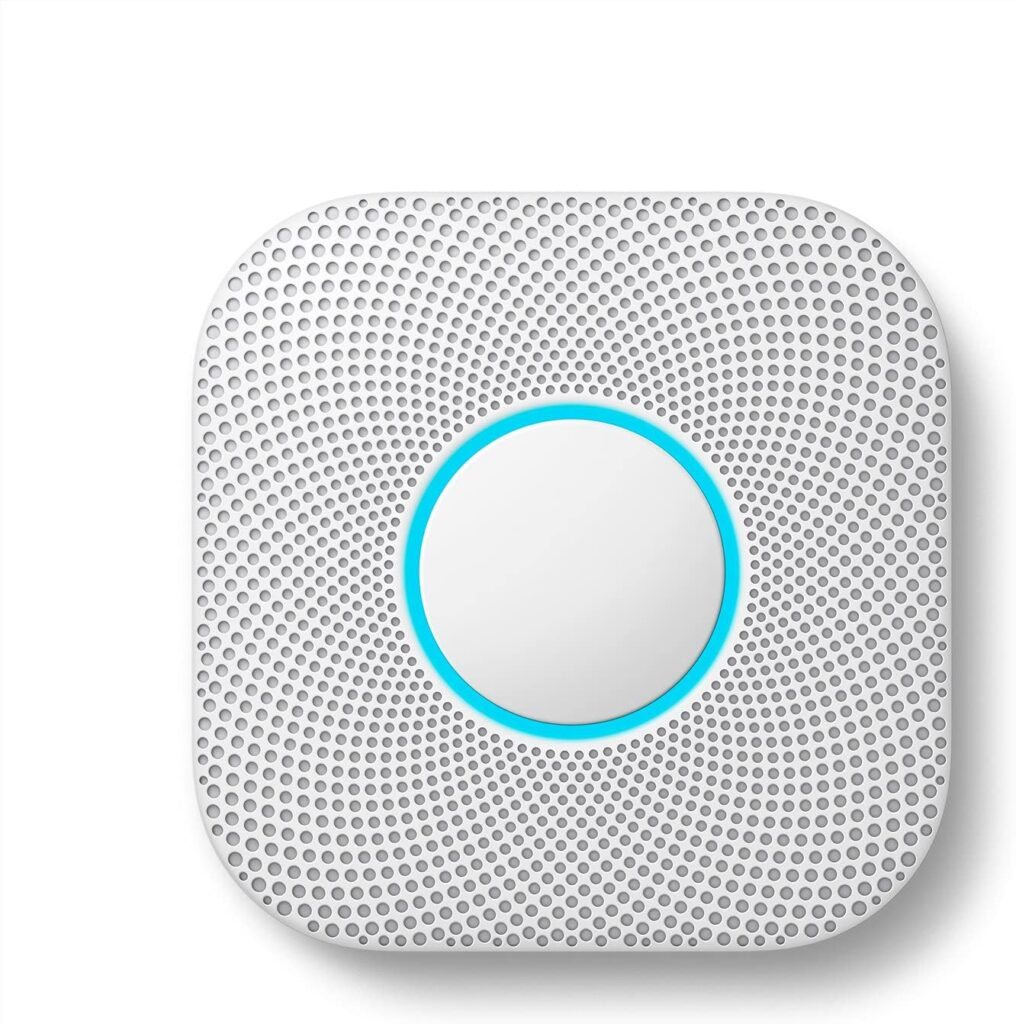
Check your smoke and carbon detector

Find it on Amazon

Functional smoke and carbon monoxide detectors are important for everyone. Carbon monoxide poisoning is a silent killer, and fires can be disastrous.

Test that the detectors work by pressing the “test” button and waiting till you hear a couple of beeps. If the sound doesn’t go off or is faint, replace the batteries. If the device still doesn’t work, you might have a faulty device and need to replace it.

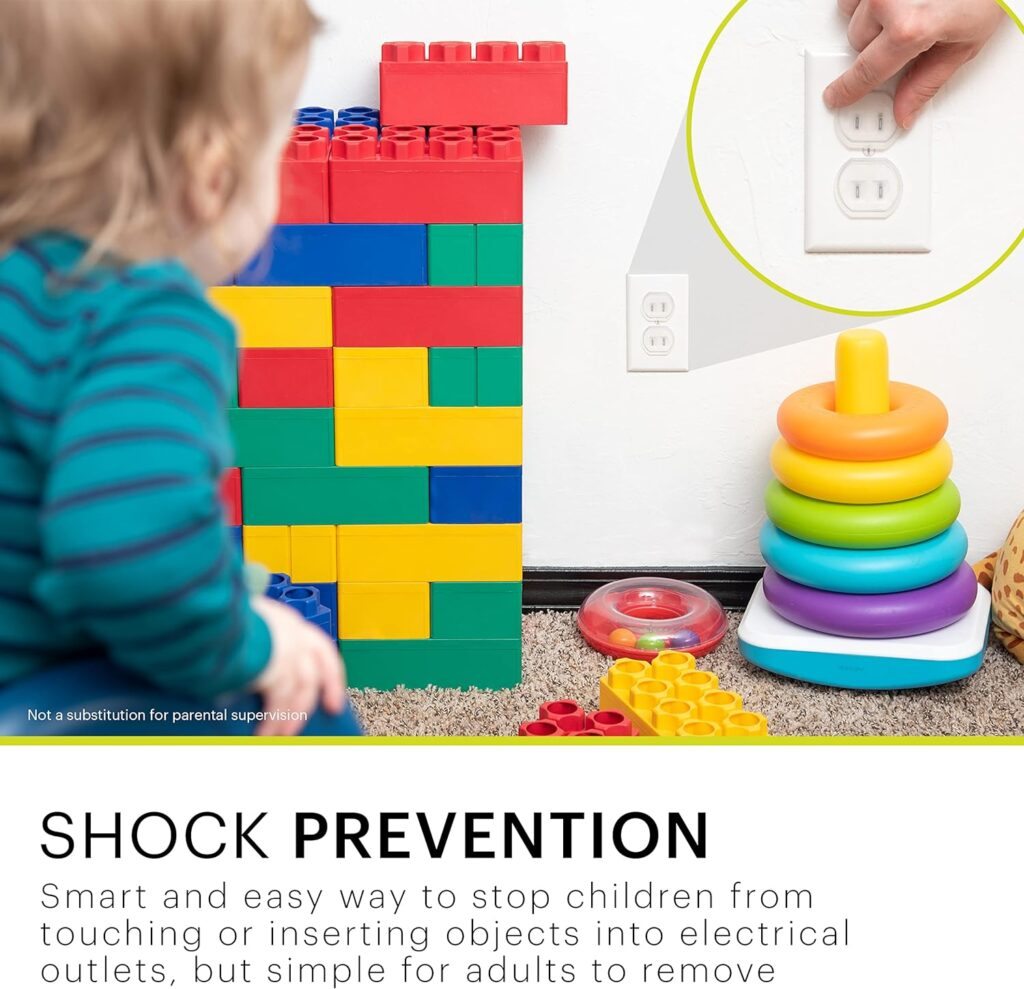
Use electrical outlet covers

Is there a worse combination than a baby next to an outlet? Small children can’t know the dangers of electrical outlets or cords just yet, so you have to block their access.

Use either plastic socket protectors that can be inserted into the outlet or adhere plastic outlet guards that can be opened and shut.

Find it on Amazon

Install baby gates for stairs, outdoor access

Find it on Amazon

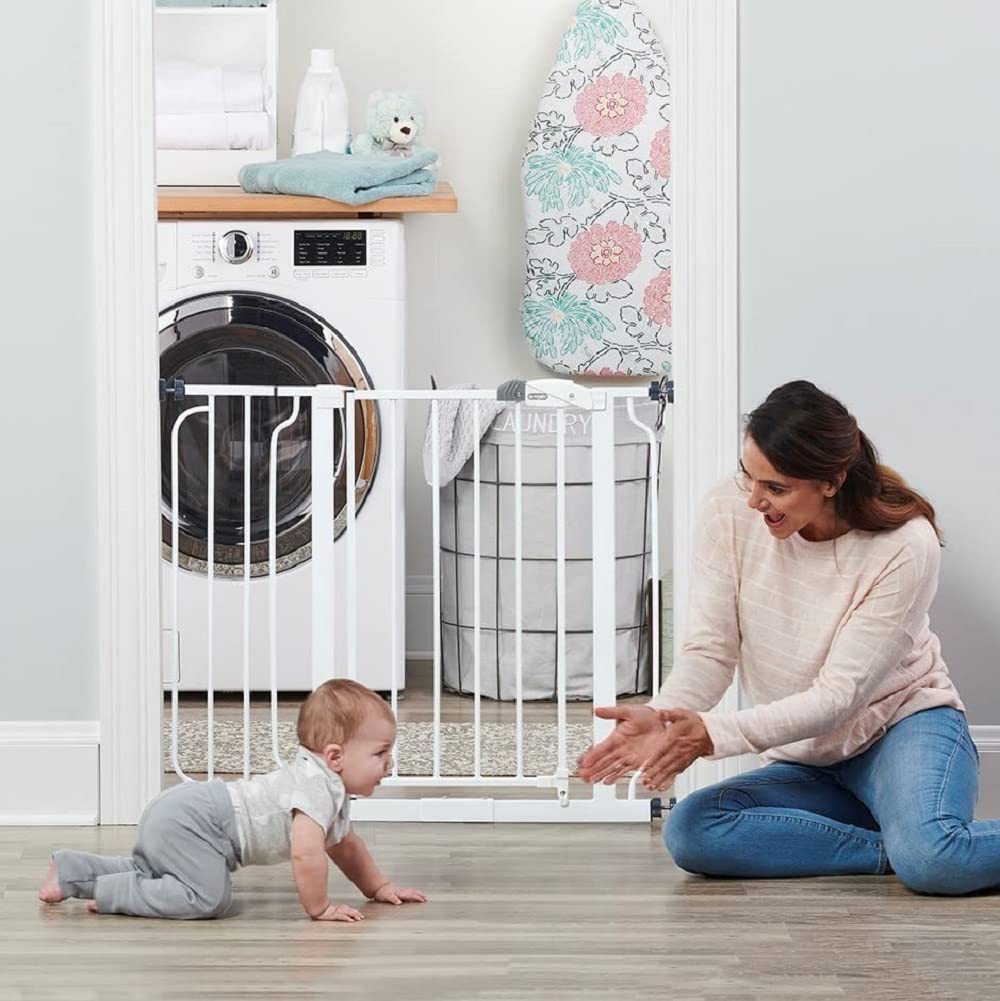
I still remember the baby gates my own parents used to keep me from waddling off. Baby gates are great for blocking off stairs, pools, or any room you don’t want a baby in

These gates can be installed with screws, adhesive, or even tension. Some come with doors you can lock, while others are tall enough only an adult can step over.

Outdoor baby gates are especially important. You can use these for your backdoor. If you have a pool or hot tub, be sure there’s no way a child can get close enough to fall in.

Remove anything that can be in the child’s reach

My last tip to baby-proof is more of a general reminder than any gadget. You want to get into the habit of keeping things out of reach. One method is to get on the ground and look at your house from a baby’s perspective. What can you grab?

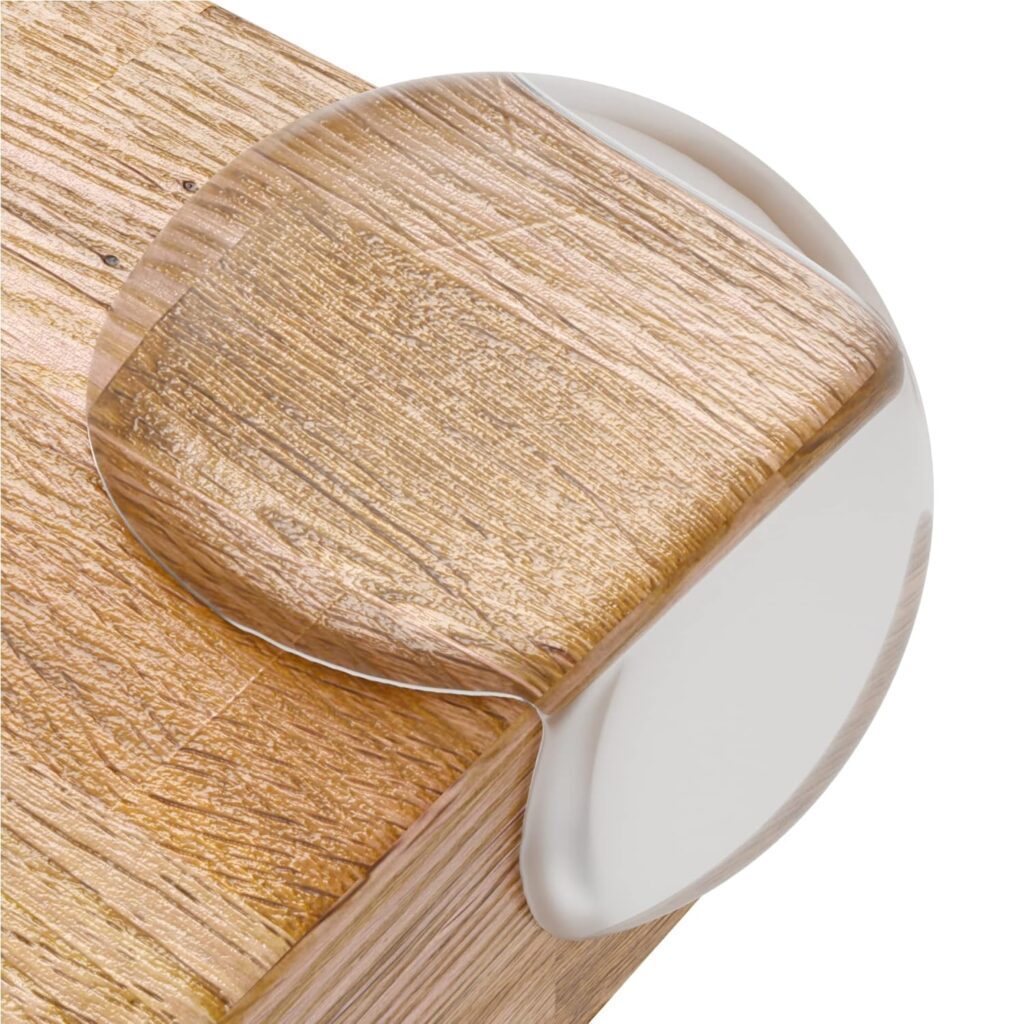
Some important things you might want to put away are tablecloths, houseplants, and sharp table corners or tools.

As always, it’s best to keep an eye on the baby and always know where they are. As they get better and better at crawling and climbing, you want to make sure your hot drinks are in your hands and not theirs.

Find it on Amazon

Take a deep breath

This list of tips might seem overwhelming at first. As a new parent, there’s so much to remember about baby-proof (ing) your home. However, if you follow these guidelines, you can feel much better knowing your baby will be safer at home.

Disclosure: We use affiliate links to earn a small commission. If you choose to purchase something through one of these links, there is no cost to you.

Homepage
Homepage
Posted in Baby, Child, ParentingTagged baby, parenting

Posts navigation

Newer posts
  • Contact Us
  • Terms and Conditions
  • Privacy Policy

© 2026 Nannies and Mommies, all rights reserved.